The Crop They Tried and Put Down
Late Bronze Age communities in Central Europe took up a new grain and then gave it up again. The reversal is legible only because some of their neighbours chose not to burn their dead.

A study in Nature Communications reconstructs life in Central Europe between roughly 1300 and 800 BCE, combining ancient DNA, strontium and oxygen isotopes, and skeletal analysis. The team, led by Eleftheria Orfanou at the Max Planck Institute for Evolutionary Anthropology, worked from rare uncremated burials in Germany, Czechia and Poland, alongside cremated remains from Kuckenburg and Esperstedt. Most of the people studied grew up where they were buried. Ancestry shifted gradually rather than through replacement, with growing connections south and southeast of the Danube. Practices travelled; populations largely did not. One of those practices was broomcorn millet, recently arrived in Europe from northeast China. It entered the diet early in the period, spread without any corresponding genetic turnover, and then declined. Wheat and barley returned. An adoption and an abandonment, both inside a few centuries. The abandonment is the harder half to see. A crop that appears in a layer announces itself — something is present that was not present before. A crop that stops being eaten leaves the same signature as one that never arrived at all: nothing. Reversals are only visible when the interval of use falls inside a body of evidence dense enough to bracket it at both ends. Most do not. That density here is not a matter of luck in preservation. It is a matter of funerary choice. The Urnfield period takes its name from its dominant rite, and cremation destroys most of the material these methods require. Yet the same settlements practiced cremation, inhumation, skull-only deposition, and multi-stage rites, sometimes side by side. The researchers describe this as a repertoire rather than a sequence — options available to communities, not stages they passed through. Which means the sample is filtered by a decision made three thousand years ago, on grounds that had nothing to do with what would later be recoverable. The individuals legible to isotope and genomic analysis are the ones whose communities happened to select the rite that preserves. Whether they differed from the cremated in status, origin, or role is the one question this evidence cannot reach, because it holds only one side of the comparison. The millet reversal, then, is not a rare event. It is a rare observation — a case where something that ordinarily leaves no trace was caught by a body of evidence assembled for other reasons entirely. What survives here is not a sample of the period. It is a sample of the people whose neighbours reached for fire less often.
Source: Orfanou, E. et al. Reconstruction of the lifeways of Central European Late Bronze Age communities using ancient DNA, isotope and osteoarchaeological analyses. Nature Communications 17 (2026). DOI: 10.1038/s41467-026-69895-y
Related articles
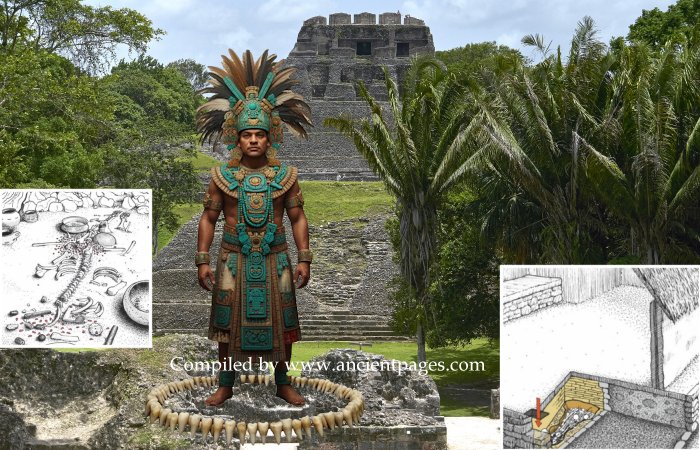
Mysterious Maya Teeth Cave Investigated By Archaeologists
Conny Waters - AncientPages.com - Archaeologists excavating an ancient cave have uncovered an unusual burial tradition that may provide new insights into ancient Maya supernatural beliefs. Background: Xunantunich Archaeological site, Belize. Credit: Denis Barthel - CC BY-SA 4.0 Image compilation…
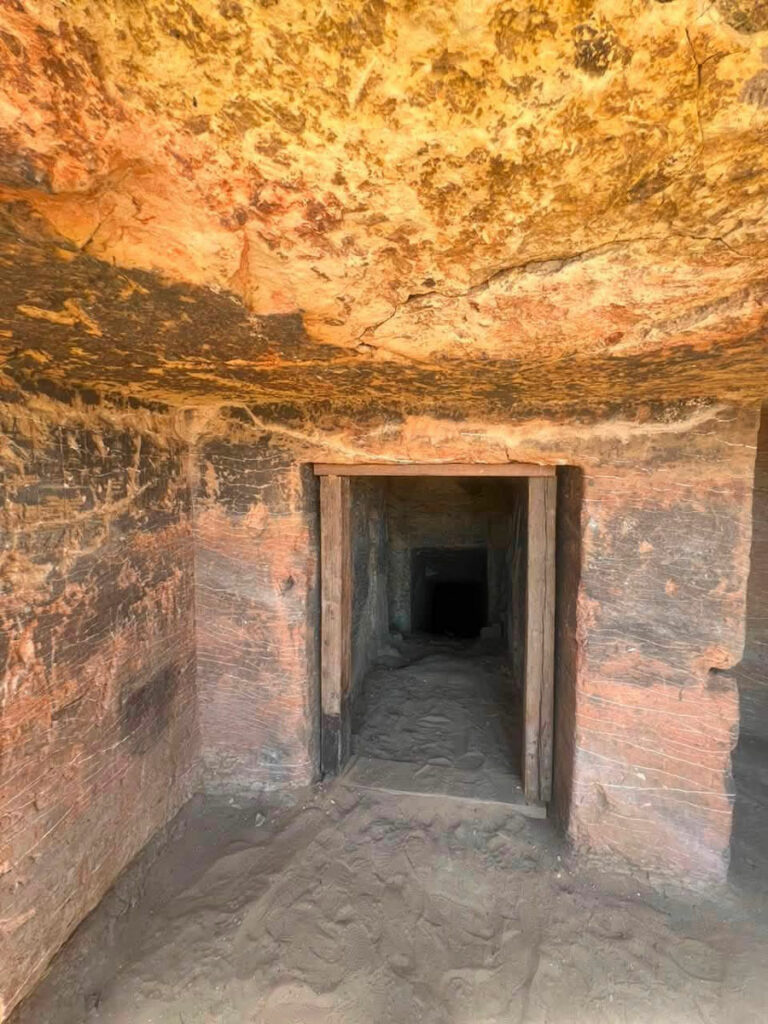
New Kingdom Tombs Excavated in Saqqara
CAIRO, EGYPT—Three rock-cut tombs dated to the New Kingdom period (ca. 1550–1070 b.c. ) have been
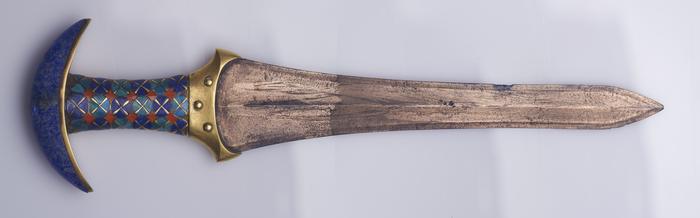
Egypt’s Royal Women Trained in Archery
CAIRO, EGYPT—ZME Science reports that Zeinab Hashesh of Beni Suef University and her colleagues examined

Wild Boar Tusk May Have Been Medieval Talisman
NOVGOROD, RUSSIA—According to a Live Science report, a piece of a large wild boar's tusk