
Bronze Votive Chariot Found in Spain
GUAREÑO, SPAIN—According to an article in The Greek Reporter, the wheels and parts of a
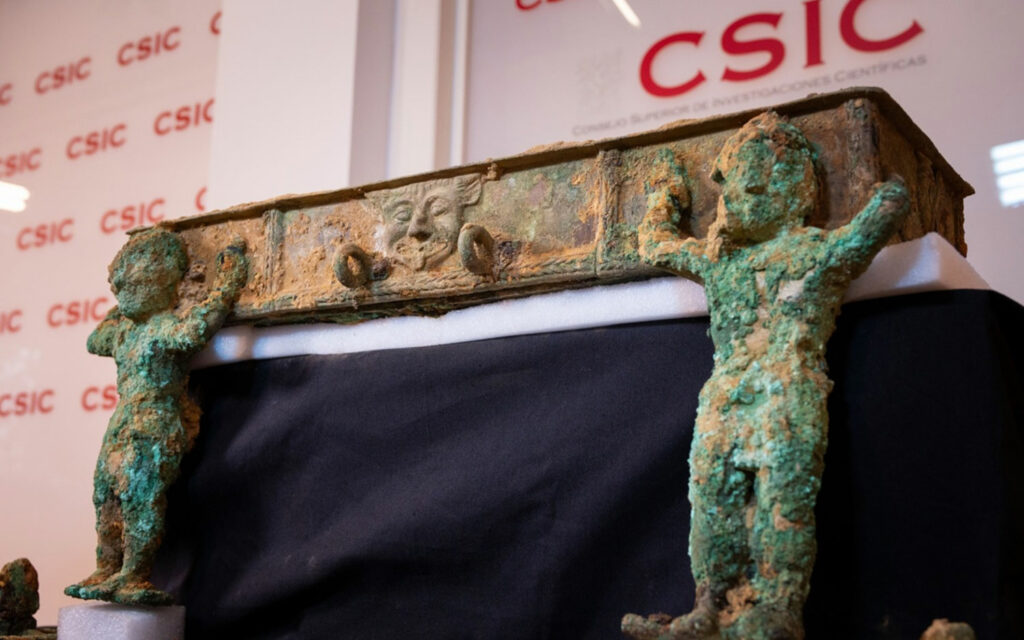
GUAREÑO, SPAIN—According to an article in The Greek Reporter, the wheels and parts of a 2,500-year-old miniature bronze chariot have been discovered in a monumental building at the Tartessian site known as Casas del Turuñuelo in southwestern Spain. In the area where the chariot parts were found, archaeologists had previously uncovered an altar shaped like a bull hide. The ceremonial vehicle is thought to have been used to hold embers, burned incense, or aromatic resins. It features bronze components joined with iron fittings; a central iron axle; and decorations on the frame resembling twisted rope, two griffins, and Achelous, a Greek river god who is portrayed with bull-like horns and a protruding tongue. The vehicle is supported by two figures thought to refer to Atlas, the Greek Titan condemned to hold up the sky for eternity. To read about a trilobite fossil uncovered at a Roman site in northern Spain, go to "Fossil Force."
Bronze chariot after conservation
The post Bronze Votive Chariot Found in Spain appeared first on Archaeology Magazine.
Original author: Jessica Esther Saraceni
Related articles
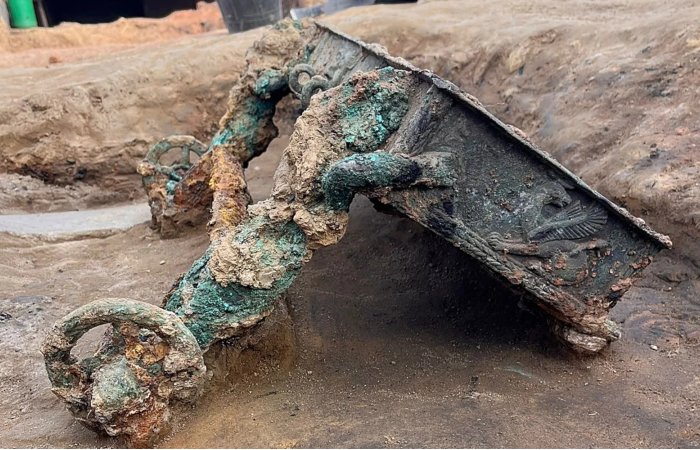
Unique 2,500-Year-Old Bronze Chariot Adorned With Mythological Figures Sheds Light On The Mysterious Tartessian Civilization
Conny Waters - AncientPages.com - Archaeologists have made a remarkable find in southwestern Spain, where a 2,500-year-old bronze chariot adorned with mythological figures offers new insights into the lost civilization of Tartessos. The Tartessian culture flourished in the southwestern Iberian…
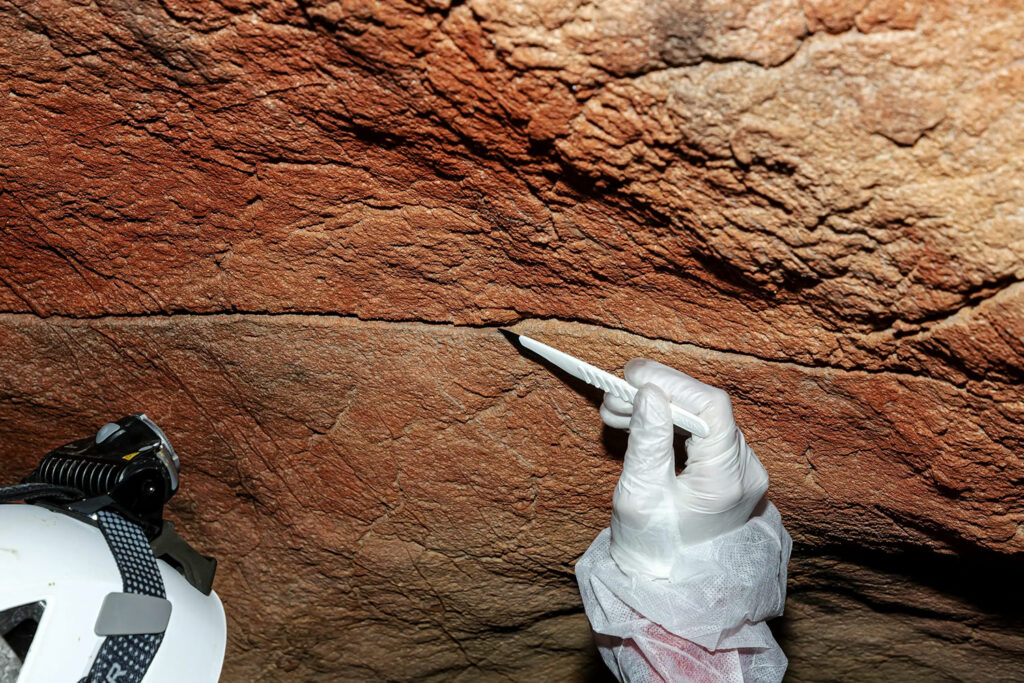
Human DNA Detected on Cave Walls
MAÇÃO, PORTUGAL—Prehistoric human DNA has been detected on cave walls by an international team of
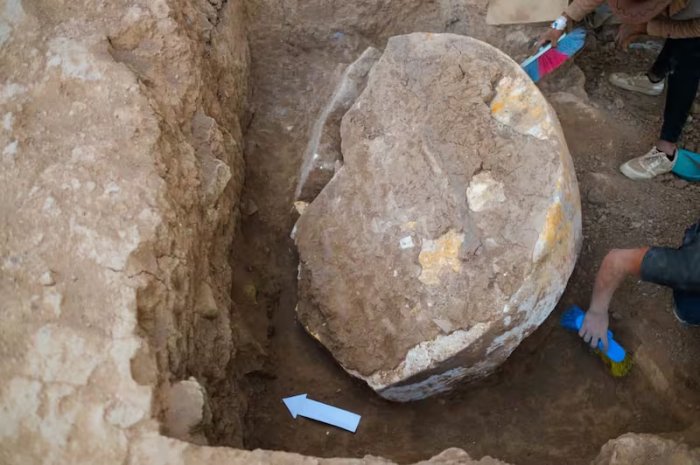
Massive 2,600‑Year‑Old Marble Stele Discovered At Nineveh’s Shamash Gate
Jan Bartek - AncientPages.com - Archaeologists in Iraq’s Nineveh province have discovered a rare Assyrian stele dating to the reign of King Ashurbanipal. This discovery gives us new insight into the city’s achievements almost 2,600 years ago. Archaeologists in Nineveh province, Iraq, have…
Skeletons Uncovered at Thailand’s Don Yai Thong Burial Site
PHETCHABURI, THAILAND—The Bangkok Post reports that a ninth set of human remains has been unearthed